
A bar top takes more abuse than almost any other surface in a restaurant: spilled drinks, citrus, ice, elbows and constant wiping. A wood top can handle all of that and still look better every year, if the species, construction and finish are chosen for the job. Here is how we approach bar tops in our shop.
Best woods for a bar top
- White oak: our first choice for most bars. It is hard and its closed pores resist moisture, which is why it has long been used for barrels.
- Walnut: rich and dark without stain. It is softer than oak, so it suits bars with a more careful crowd or a durable film finish.
- Cherry: fine grain that darkens to a warm red-brown. Best with a protective finish in high-traffic bars.
Our white oak vs. walnut vs. cherry guide compares the three in more detail.
Typical bar dimensions
- Height: about 42 inches from the floor to the top of the bar for standing and bar stools; counter-height bars run about 36 inches.
- Depth: a bar top is usually about 16 to 24 inches deep, depending on whether it includes a drink rail or back ledge.
- Overhang: roughly 8 to 10 inches on the guest side gives knee room for people on stools.
- Stool height: about 30 inches for a 42-inch bar, leaving roughly 12 inches between seat and top.
- Width per guest: plan about 24 inches per stool.
Confirm accessible bar and counter sections with your architect, since lowered sections are often required.
Thickness and construction
Most solid wood bar tops are 1.5 to 2 inches thick. Thicker tops look substantial and give more material for future refinishing. Tops are glued up from narrower boards so they stay flat, and they need to be attached in a way that lets the wood move with humidity.
Edge profiles
A rounded or eased front edge is more comfortable for forearms and holds up better to bumps than a sharp square edge. Some bars add a raised drink rail or a lower ledge on the bartender side for prep.
Finishes that hold up
The finish matters as much as the wood. For bar tops we choose between durable film finishes, which resist water, alcohol and citrus best, and penetrating hardwax oils, which feel more natural and are easy to spot-repair but need more frequent maintenance. We pick based on how the bar will be used and cleaned.
Caring for a wood bar top
- Wipe spills promptly, especially citrus and wine
- Use mild cleaners; avoid harsh chemicals and abrasive pads
- Do not leave standing water or wet rags on the top overnight
- Plan periodic maintenance coats, more often for oil finishes
Bars we have built
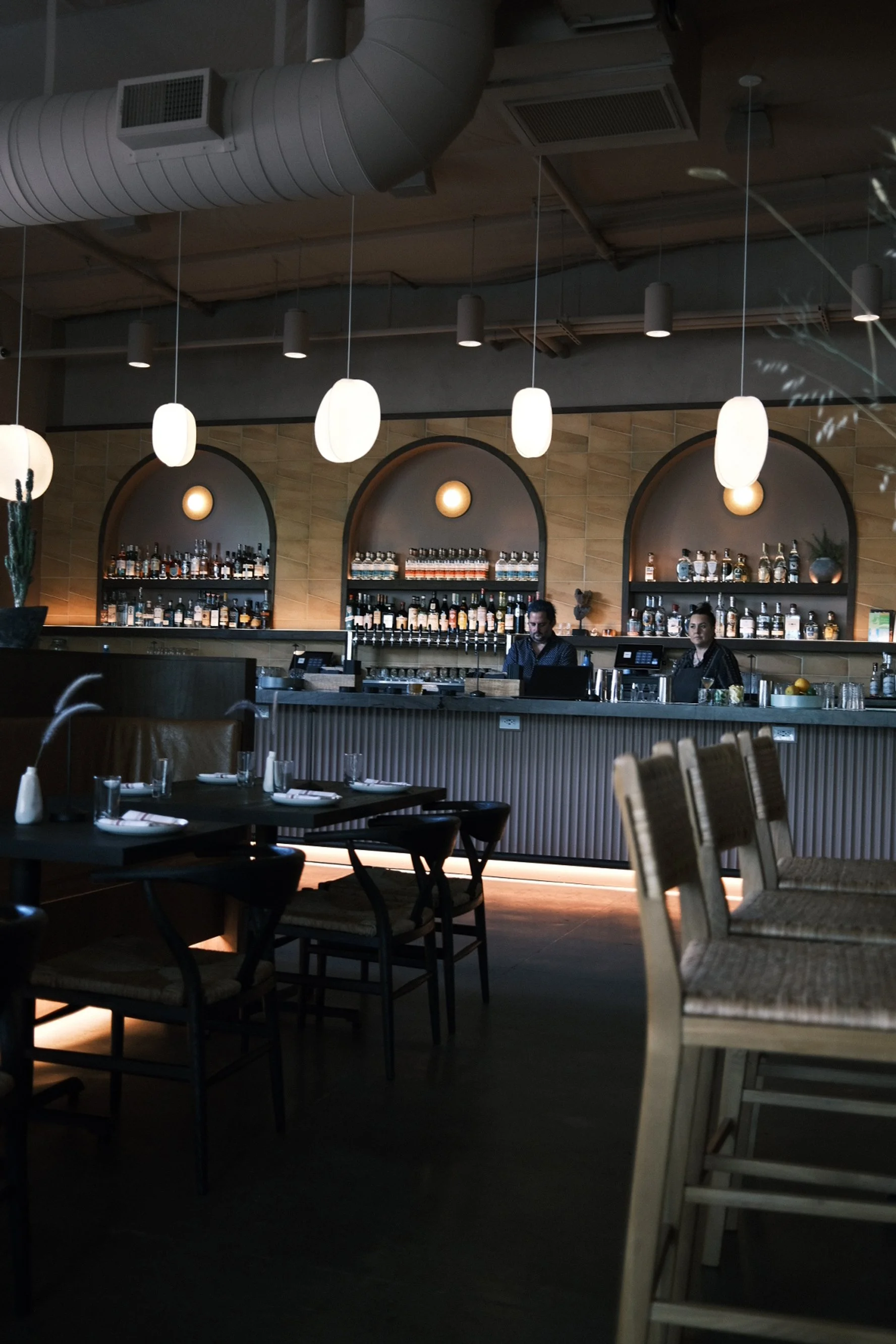
At Cantina Pedrigal in Folsom we built a fluted bar front and arched back-bar niches, and at Slow and Low in Elk Grove we built the back bar along with the white oak dining hall. For Little While in San Diego we built a curved white oak bar front.
Planning a bar?
See our bar millwork and hospitality millwork pages, or send us your plans.