
White oak is our most-used wood, and how it is cut from the log changes how it looks and behaves as much as the species itself. Here is the difference between the three common cuts.
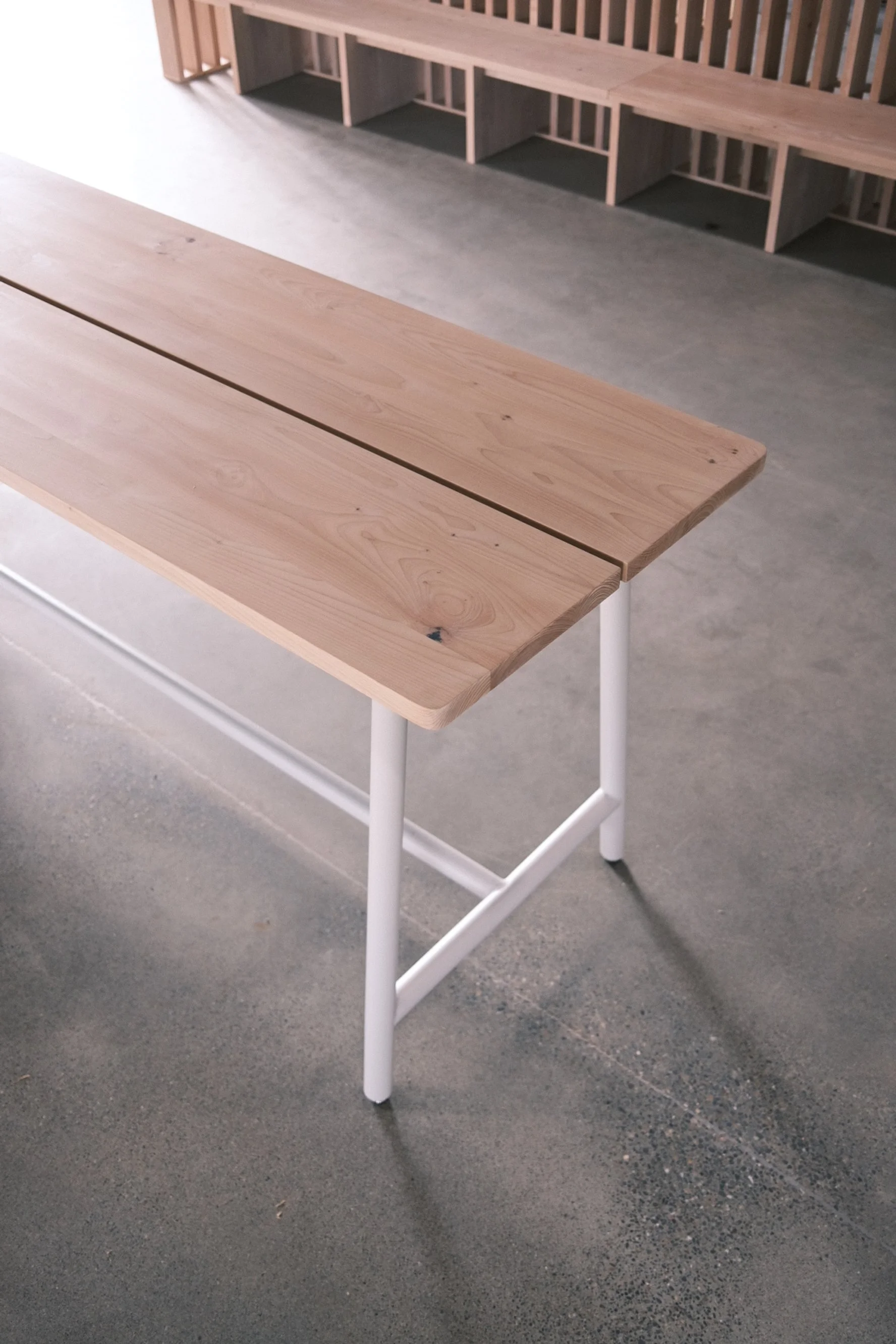
Plain sawn (flat sawn)
Boards are cut straight through the log. This gives the familiar cathedral or flame grain pattern and the highest yield, so it is the most affordable. Plain sawn boards move more across their width with changes in humidity.
- Look: bold cathedral grain
- Stability: moves the most
- Best for: rustic or traditional looks, pieces where grain character is welcome
Quartersawn
Boards are cut radially from the log, so the growth rings run nearly perpendicular to the face. In white oak this exposes the medullary rays as shimmering flecks, the look associated with Arts and Crafts furniture.
- Look: straight grain with distinctive ray fleck
- Stability: very stable
- Best for: tabletops, doors, statement furniture and anywhere the fleck is part of the design
Rift sawn
Cut at an angle that minimizes ray fleck, rift sawn oak has tight, straight, linear grain on every face. It has the lowest yield, so it usually costs the most.
- Look: clean, straight lines with little or no fleck
- Stability: very stable
- Best for: modern interiors, legs and frames that should look the same on all sides, long runs of paneling and casework
Quick comparison
- Most affordable: plain sawn
- Most character: quartersawn
- Cleanest, most modern: rift sawn
- Most stable: rift and quartersawn
Mixing cuts
Many projects combine them: rift sawn for legs, frames and paneling, and quartersawn or carefully selected plain sawn for tops. Veneers in each cut make large flat panels more stable and economical.
Related guides
White oak vs. walnut vs. cherry · Hardwax oil vs. polyurethane · Dining table size guide
See our white oak work for Slow and Low, Okesutora and Little While, or start a project.