
Inside a 4-Week Bay Area Tech HQ Buildout: The 1x Design Studio
When Alexander of matthewalexanderla.com sent me a DM in early March, I didn't know I was about to take on one of the most ambitious commercial millwork projects of my career. He'd been pointed my way through an Instagram story asking for trusted Bay Area woodworkers. After a quick call, the scope was clear — and so was the deadline.
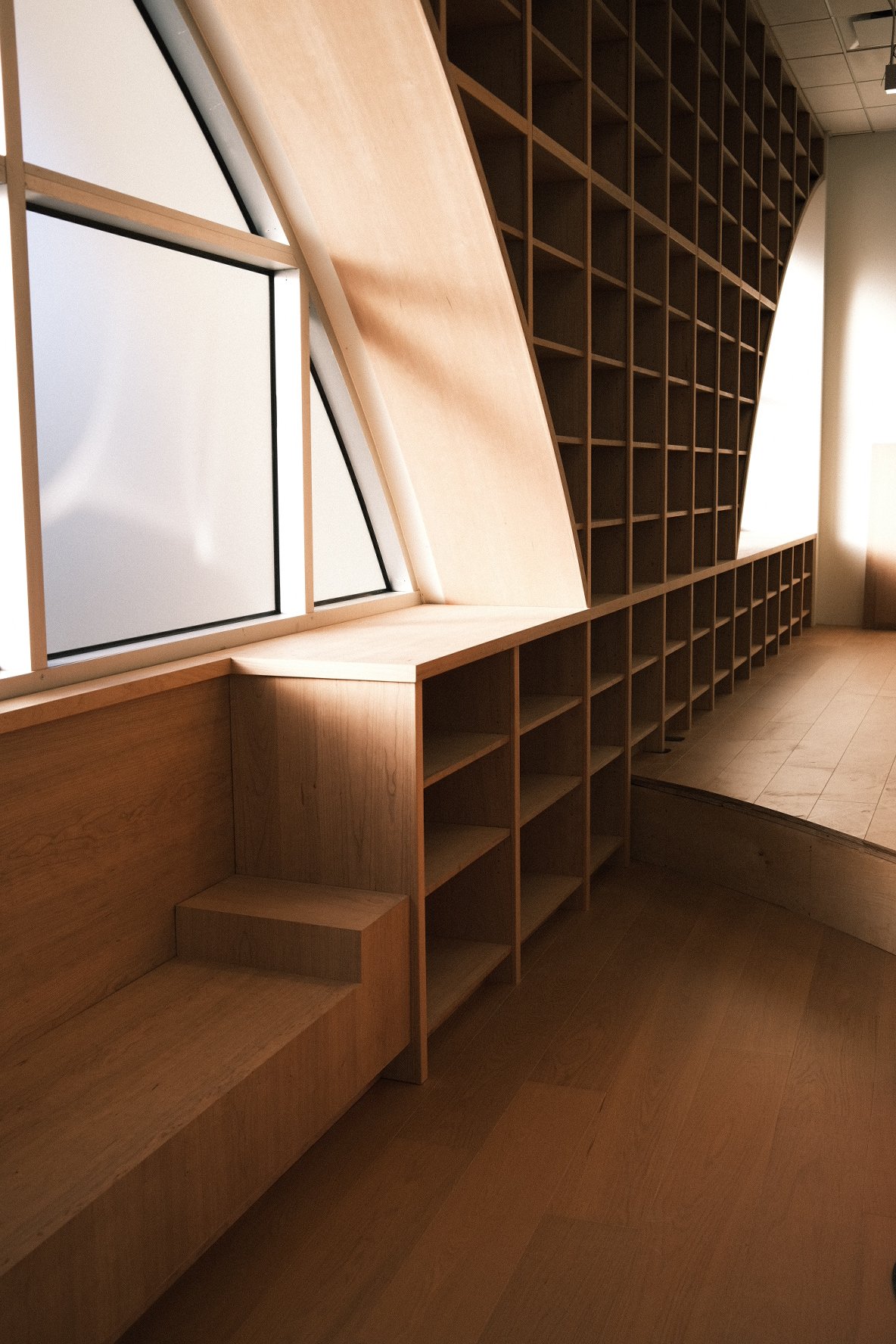
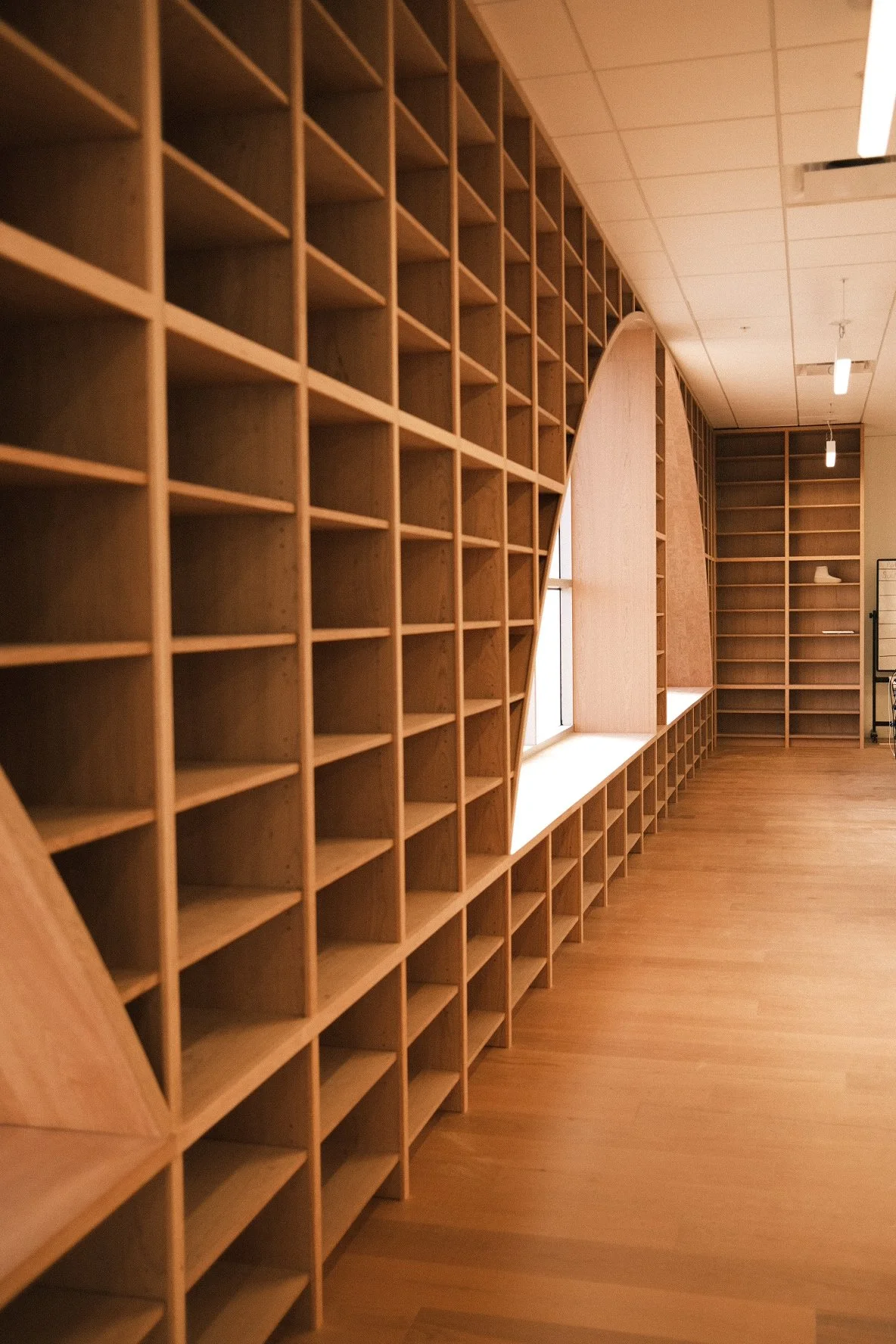
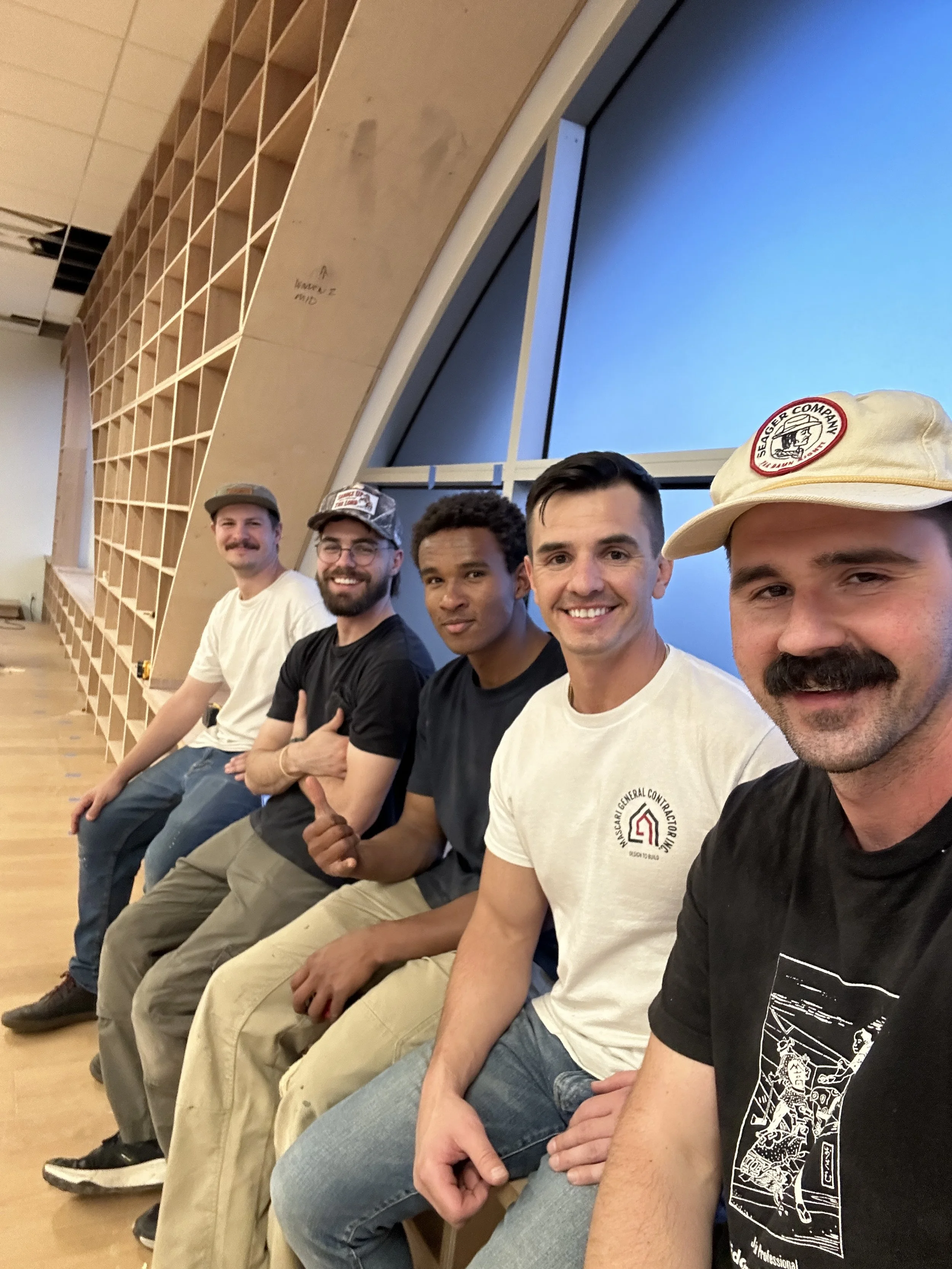
1x, the humanoid robotics company, was finishing out their new headquarters in San Carlos. The space needed two walls of open, adjustable cherry shelving — around 65 feet long each — and the cabinetry had to wrap precisely around six massive arched windows, each 16 feet wide. The target install date was March 9th.
That was about a week away.
Within the first ten minutes of that call I knew March 9th wasn't realistic. But I also knew we could do the next best thing for a Bay Area tech company on a deadline: get it done as fast as humanly possible without cutting any corners on quality. That conversation turned into a four-week sprint that ended with one of the cleanest tech-office buildouts I've ever delivered.
This is how it came together — and what facilities and workplace leaders at Bay Area tech companies should know if you're staring down a similar timeline.
Step 1: Don't trust a tape measure on a tech-office buildout
My wife and I were already heading to San Francisco that weekend, so I told Alex I'd swing by the site. After security clearance, I walked the floor and saw the windows in person.
Six arched windows, each sixteen feet across. Cabinetry that needed to land cleanly into curved openings on a finished wall.
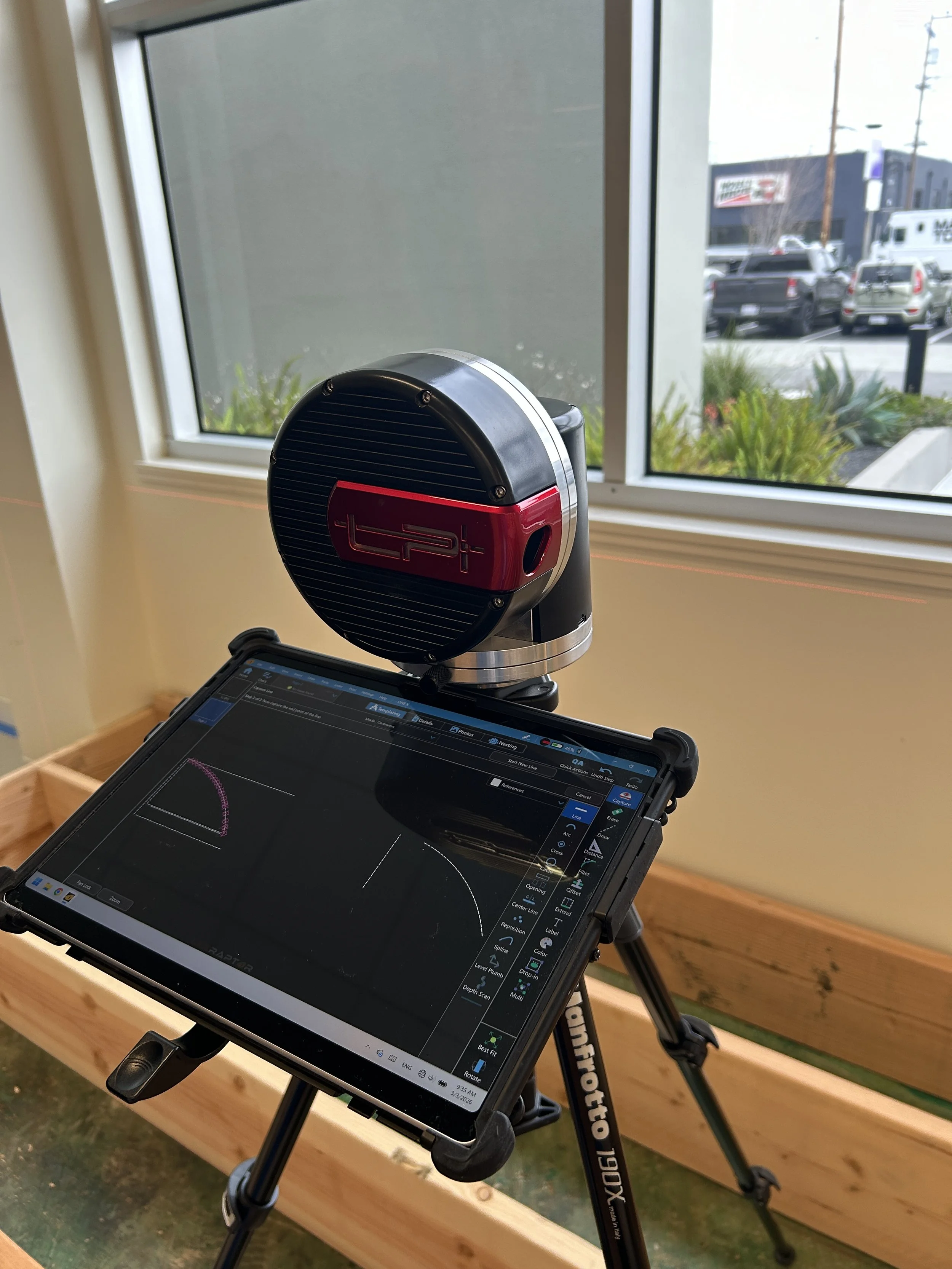
I love a challenge — that's part of why this project pulled me in immediately — but I also knew a tape measure wasn't going to cut it. Not for arches that size. The margin for error on commercial millwork wrapping a curved opening is essentially zero, and "close enough" reads as sloppy the moment you walk into a tech HQ.
So I brought in a partner with a laser measuring tool that captures radius geometry and outputs a clean DXF file. That single decision protected the entire project. Once that DXF was in my hands, the rest of the build became solvable.
Step 2: Model the entire room before cutting a single board
While I began modeling, Alex sent over a design intent file showing the look 1x wanted. We adjusted a few details to match how my shop actually fabricates — small changes that wouldn't read visually but would save days of rework. Benjamin, my point of contact at 1x, jumped on 10-minute Google Meet syncs with me and Alex to align on aesthetics, materials, and approach. No 90-minute design committees. Quick decisions, mutual trust, and forward motion. That's how tech-office millwork gets done on a real timeline.
I imported the DXF into Mosaic, the cabinetry software I run for square casework, and built out every standard cabinet in the room. Then I moved the curved sections into a separate program designed for non-orthogonal geometry, where I could program the arched cabinets against the actual measured radius of each window.
This step took time. It also wasn't optional. On a fast-turnaround commercial fabrication project, the modeling phase is where you either lock in success or guarantee a disaster. Every hour spent inside CAD saves a day on site.
After about a week of planning and modeling, I drove back to San Carlos on a Sunday afternoon to confirm critical measurements once the new flooring had been installed (heights and reveals always shift after finished floors go in). The moment I had those numbers I drove straight back to Sacramento, walked into the shop, and started milling parts. I didn't stop until 4 AM. I went home slept for 3 hours and went back to continue working with the team.
Step 3: Scale the team to match the deadline
Three guys — my standard shop crew — was never going to ship 130 feet of custom cherry shelving and 100+ cabinets in two weeks. So I scaled up.
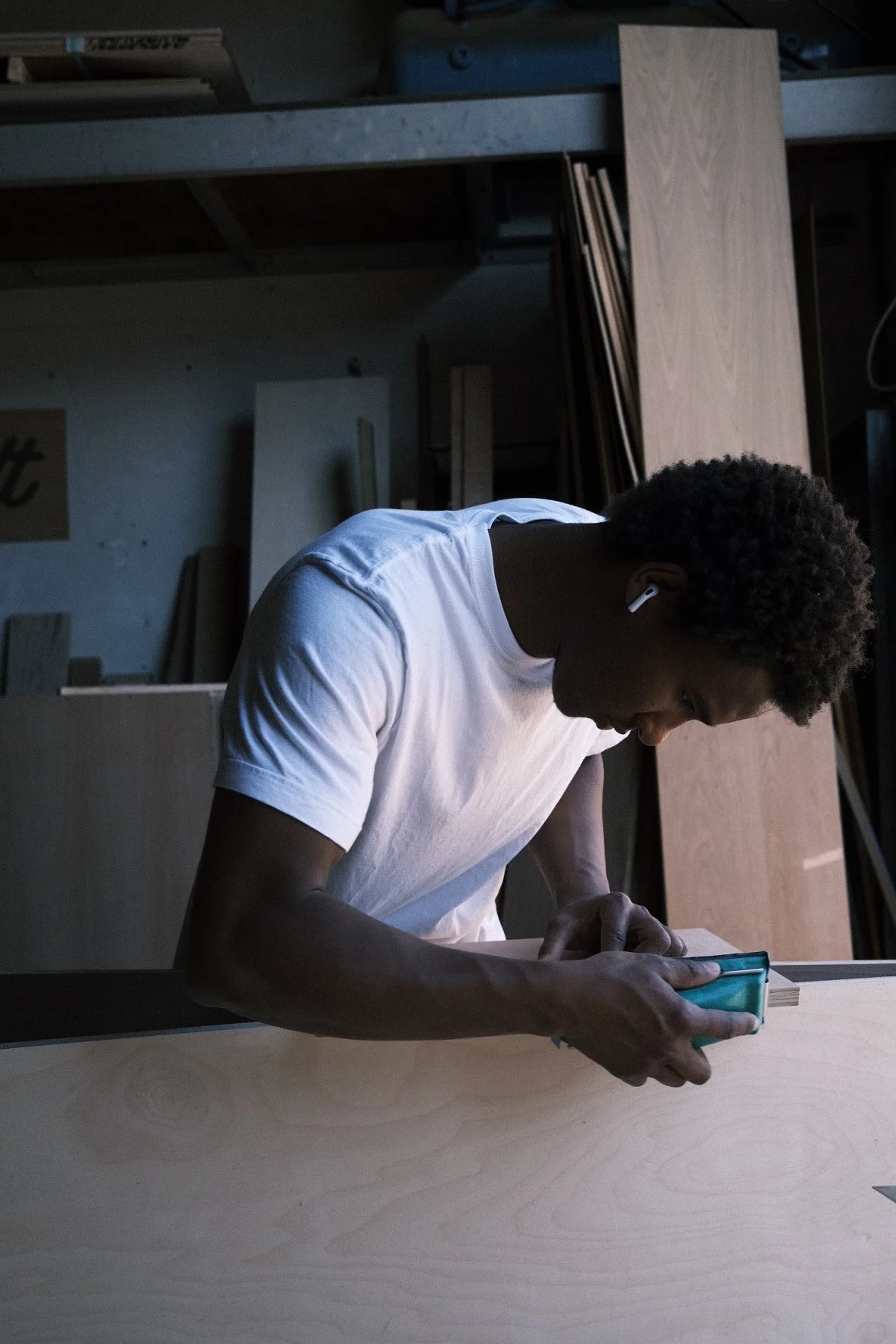
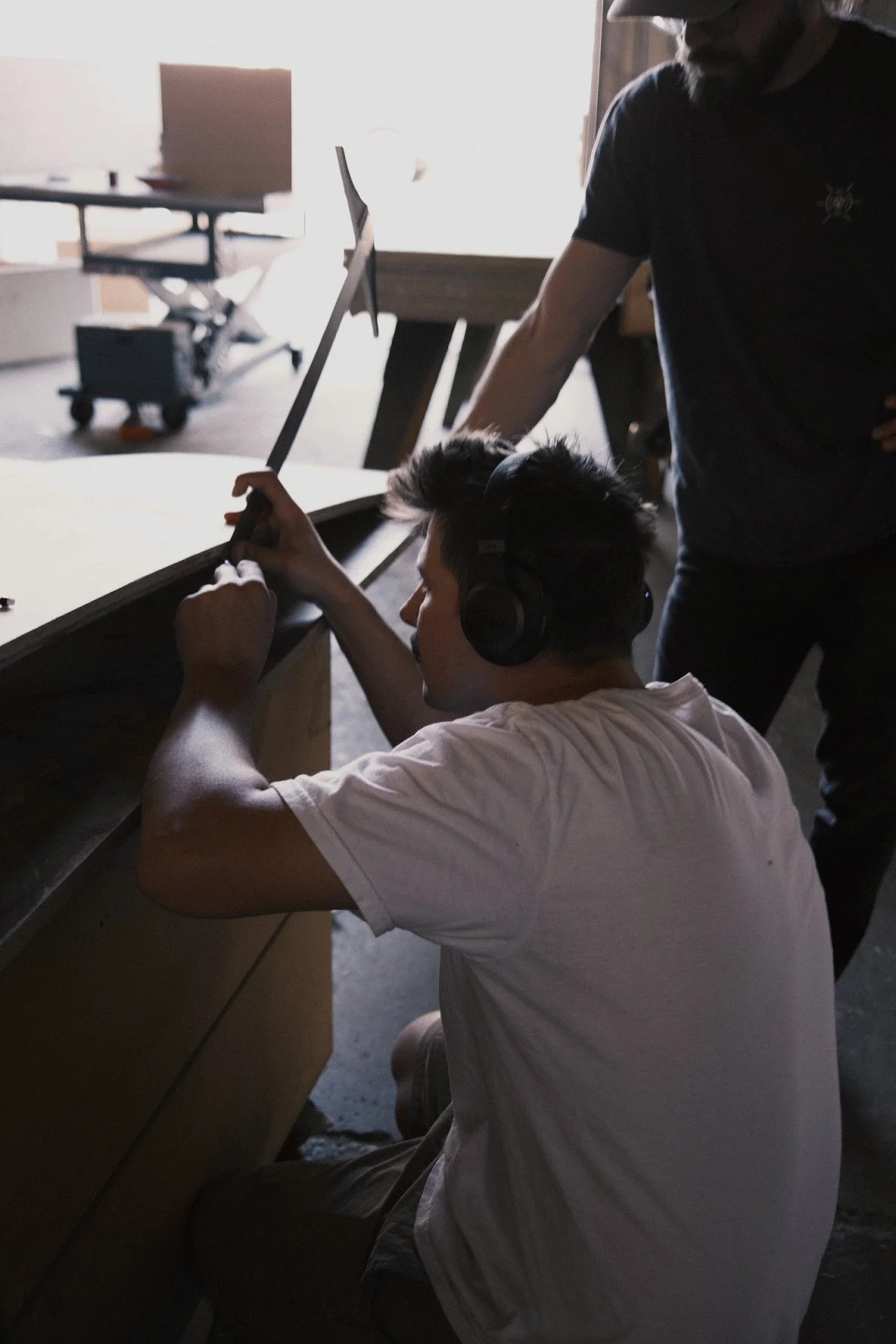
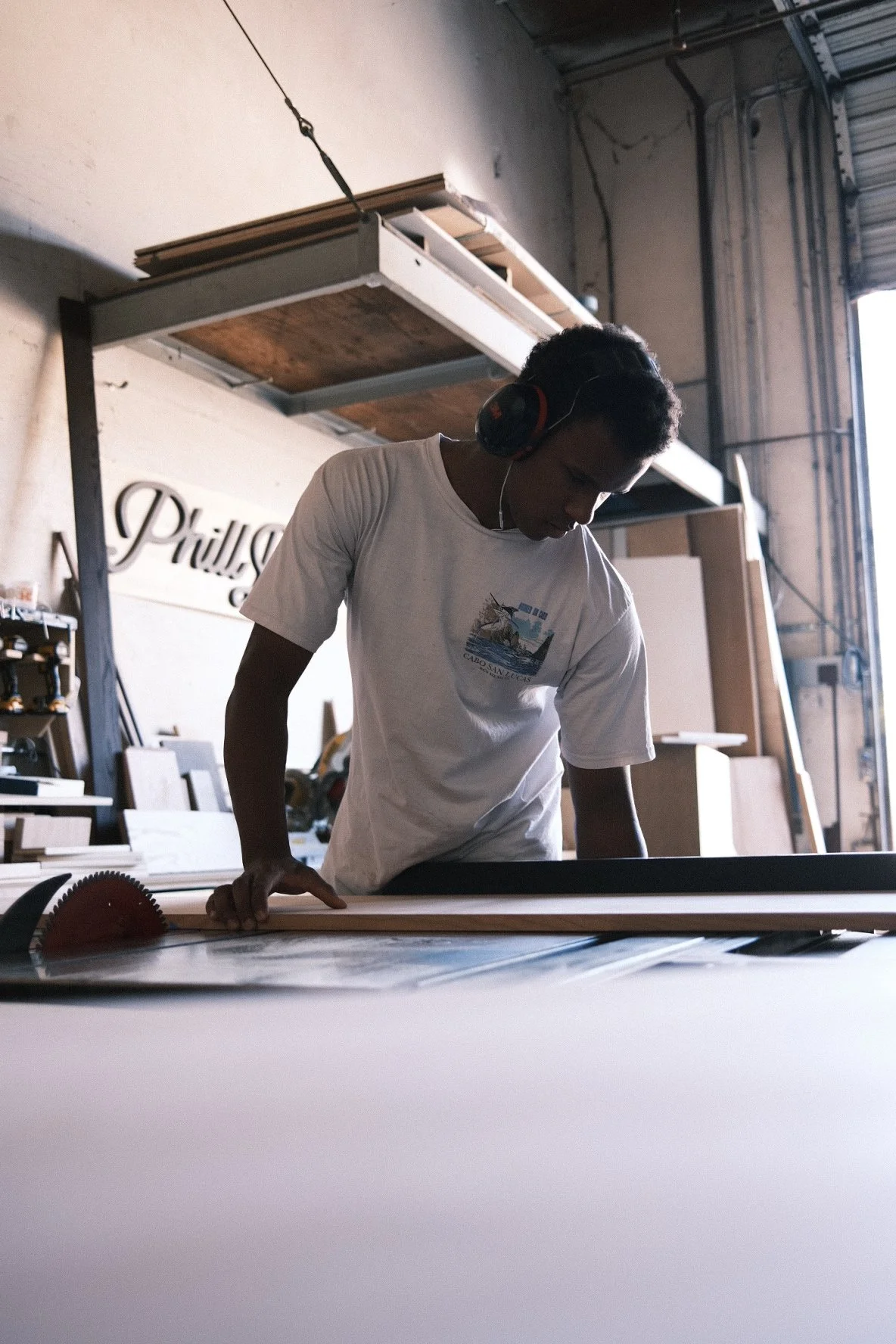
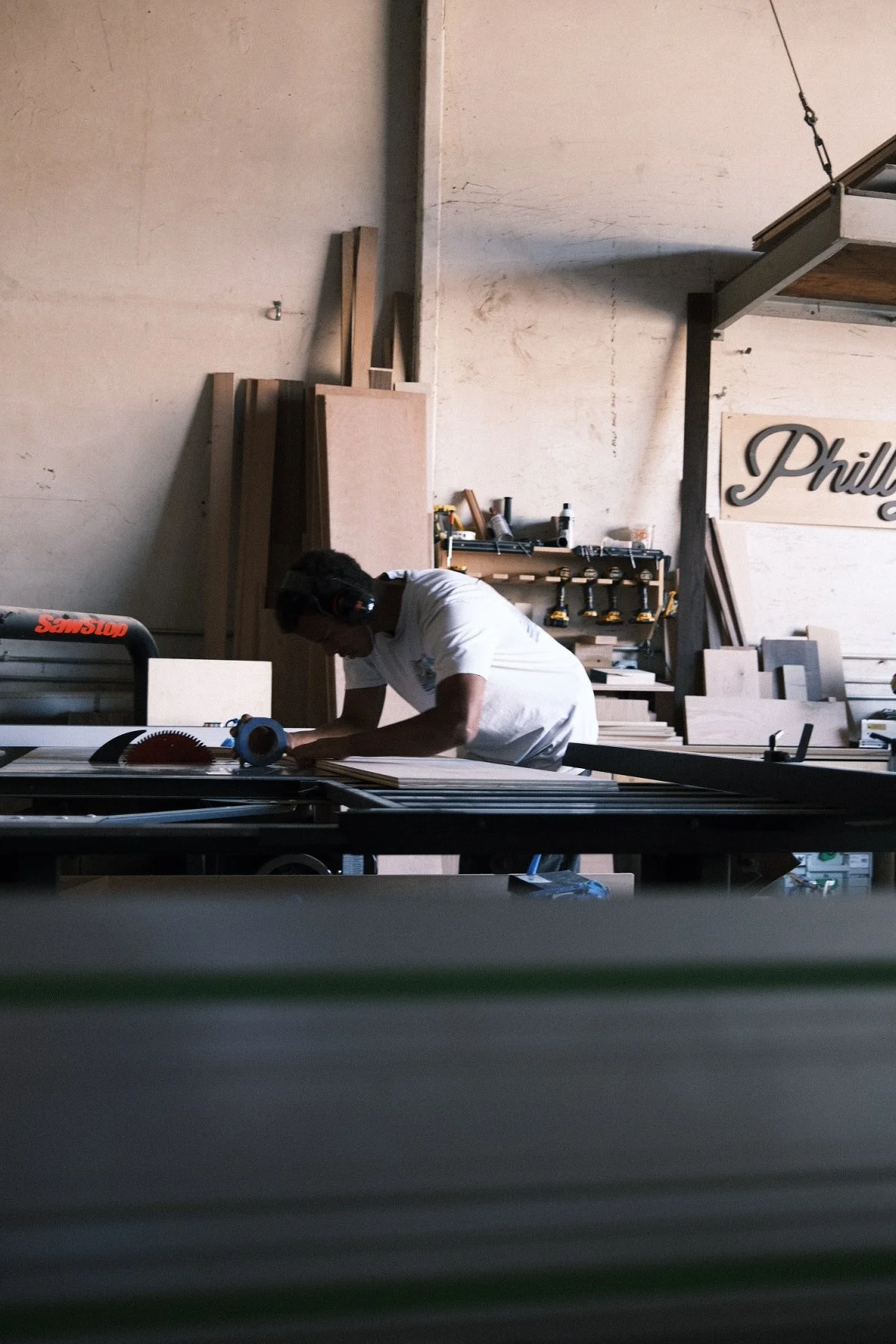
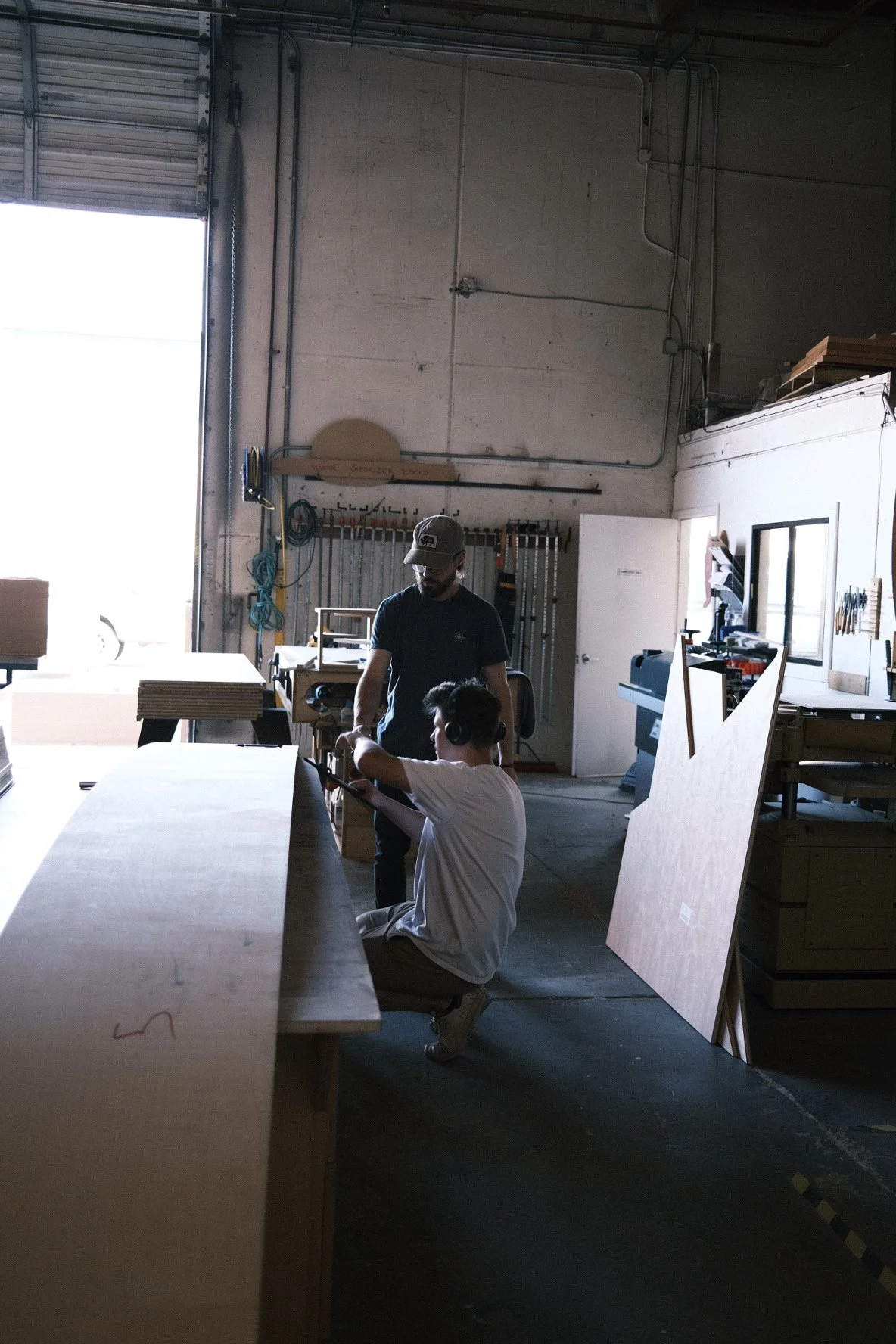
I brought on additional helpers locally, and flew my brother in from San Diego to run a station full-time. My shop turned into a 24-hour operation with dedicated stations for milling, sanding, assembly, and pallet wrapping. The CNC ran nonstop for two weeks straight.
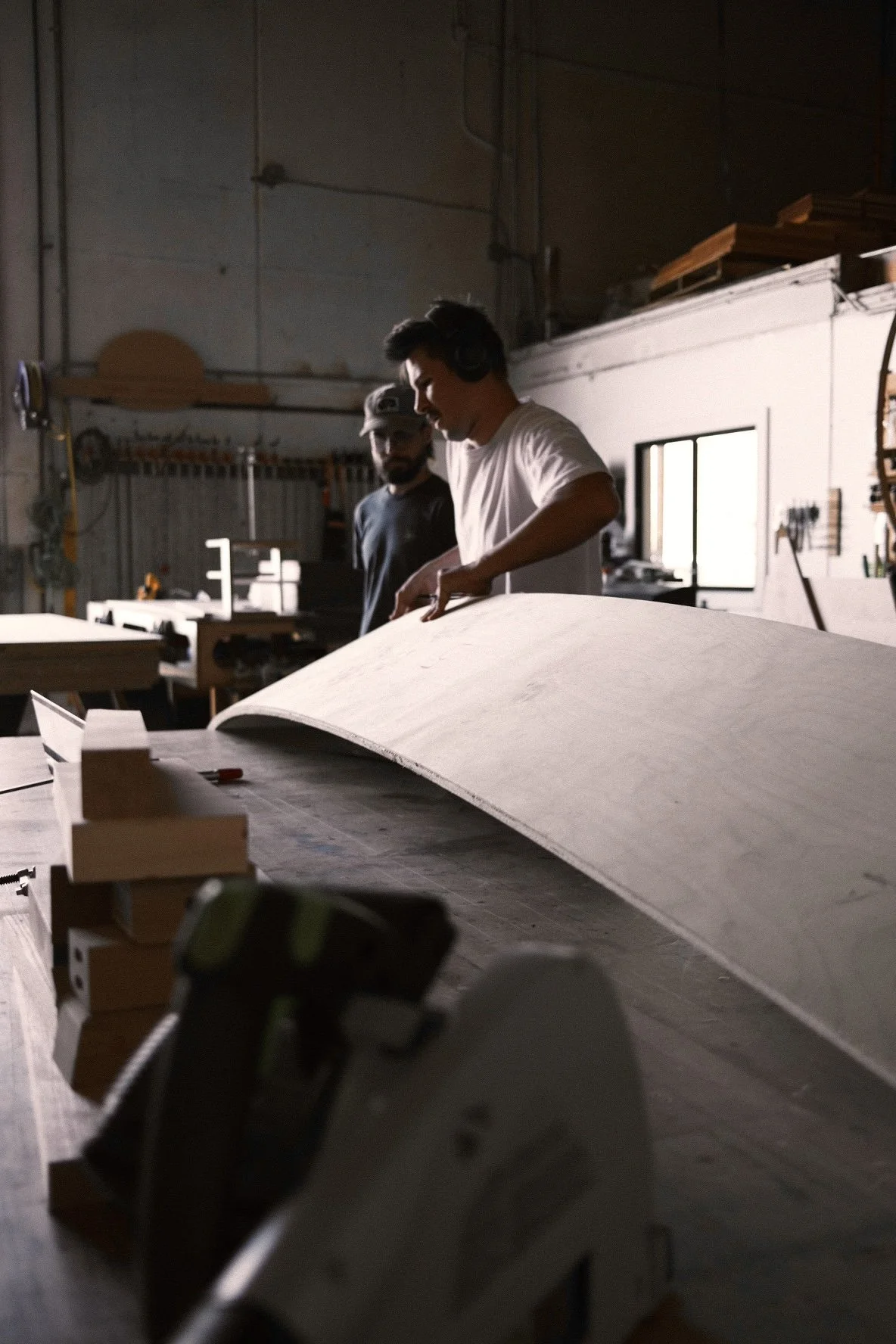
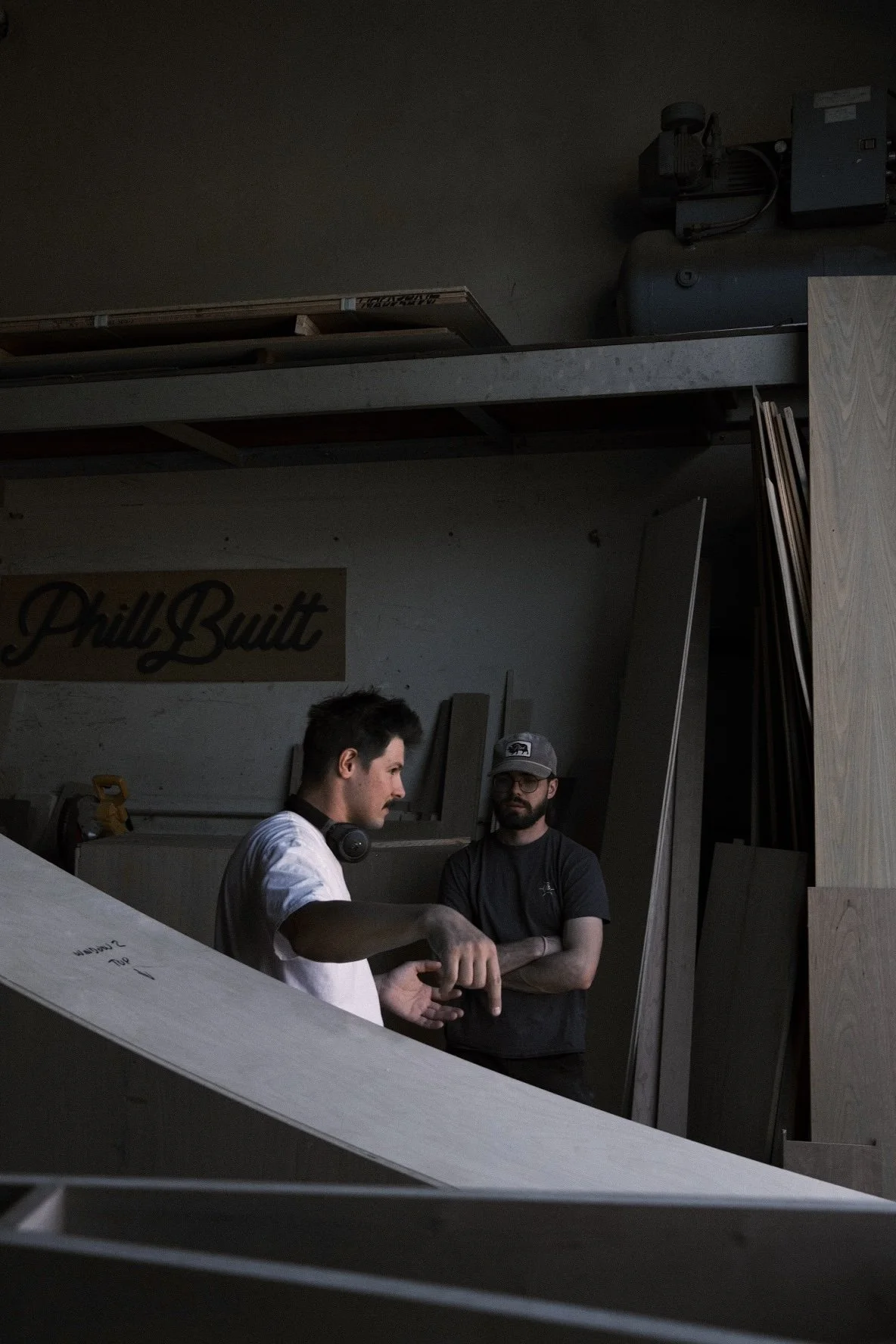
Step 4: Fabricate, palletize, ship — in parallel
We blew through five units of cherry plywood. I exhausted every supplier in the Sacramento area and had a partner ship additional cherry up from Southern California so we could keep production moving.
As cabinets came off the assembly line, they were sanded, packed onto pallets, wrapped, and loaded onto a box truck I'd coordinated to run between Sacramento and San Carlos. Finished cabinets were staged at 1x's facility as fast as we could build them — so by the time install night rolled around, every piece was already onsite and ready.
In two weeks we built every cabinet the project required. Over 100 units in cherry plywood, with arched cabinetry programmed against the laser-captured DXF of each window.
Total project turnaround, from first DM to final reveal: about four weeks.
Why this matters for Bay Area tech companies planning a buildout
Most commercial millwork shops aren't built for tech-company timelines. They're built for general contractors on 16-week schedules. When Bay Area tech companies — Silicon Valley HQs, San Francisco offices, Peninsula campuses — need a buildout that looks finished on day one of move-in, the bottleneck is almost always the millwork.
We are built differently. We run an in-house CNC, an in-house design and modeling pipeline, and a fabrication crew that can scale up for sprint timelines. We've delivered for tech clients who measure schedules in days, not quarters. And we've done the kind of curved, precision-fit casework that lesser shops will tell you needs more time than you have.
If your facilities, workplace, or design-build team is staring down a tight buildout — adjustable shelving, custom cabinetry, reception millwork, café casework, or curved feature walls — we can help.
Request an RFP
If you're planning a Bay Area tech office buildout and need commercial millwork fabricated fast and installed clean, send the scope. I'll respond personally.
Request a quote at phillbuilt.com or email phill@phillbuilt.com. Include your timeline, square footage, and any drawings you already have — I'll come back with a feasibility read inside 48 hours.